

"There isn't one thing better than the other, that it is about finding the right way of communicating to an audience. And sometimes that is with abstraction, and sometimes that is being as close as you can to the narrative.".
Stephen Moynihan
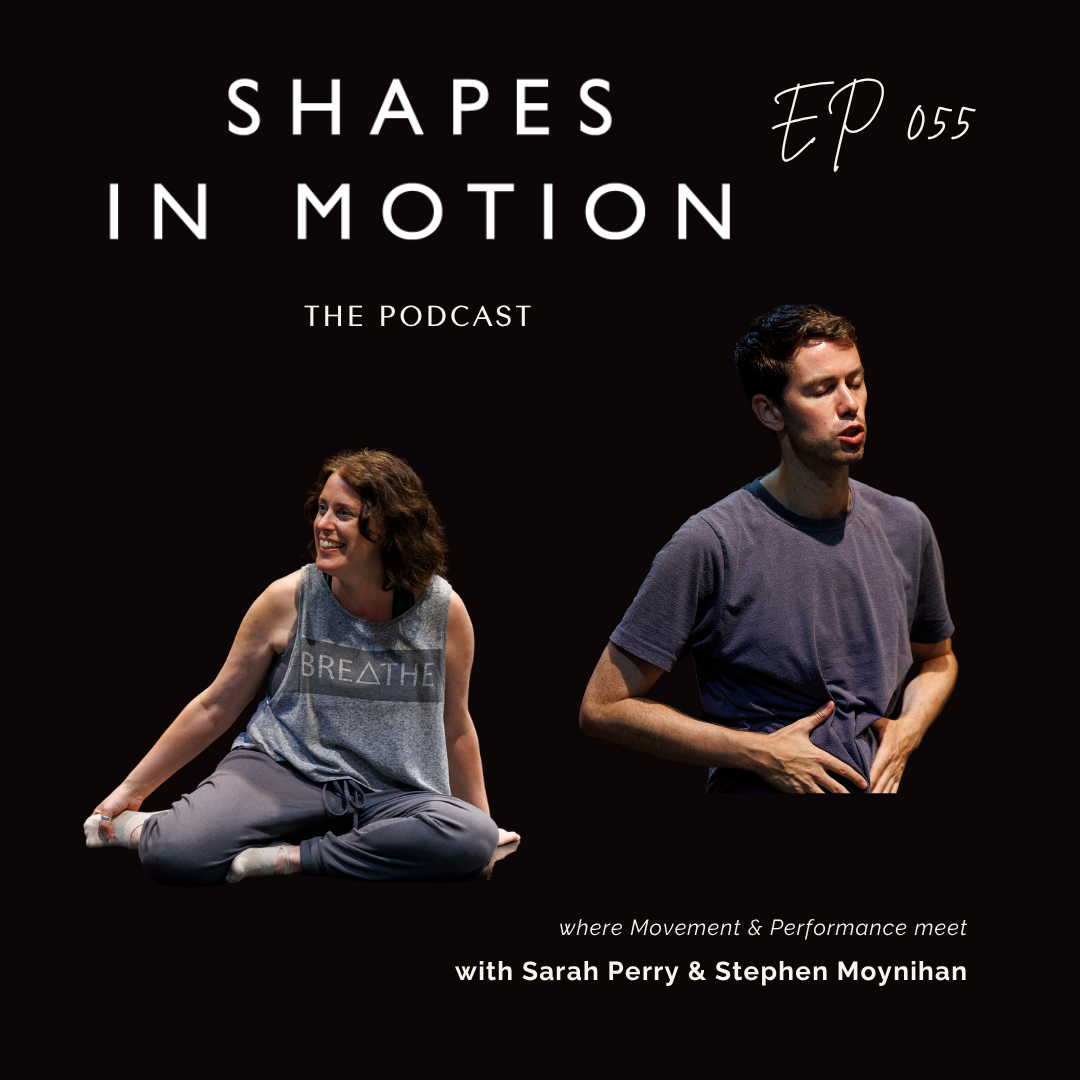
In this episode, Sarah Perry and Stephen Moynihan explore the relationship between realism and abstraction in movement direction, drawing on their different creative backgrounds and approaches to performance.
From subtle gestures to highly stylised physical expression, they discuss how intention, rhythm, space and dynamics can shape character, and how physical exploration can open up unexpected possibilities for performers.
Sarah also reflects on her work on the Royal Shakespeare Company's 'Dream, an innovative live motion-capture production, as they consider how both realism and abstraction can serve storytelling, challenge expectations and connect with audiences.
Chapters
Why movement moves between abstraction and story
Sarah’s research: when a gesture becomes abstract
Stephen’s shift from abstract dance to character work
Start with a truthful impulse, then play beyond the brief
Using a 1-to-10 scale to find performance choices
Why actors should explore character physicality early
Meaning, intention, and what audiences bring
Dream: revealing the bodies behind motion capture
Breaking theatrical rules and making space for viewers
Abstraction, audience access, and creative responsibility
Taking movement exploration from theatre to screen
Adapting the process to the performer and production
Royal Shakespeare Company - https://www.rsc.org.uk/
The Encounter - https://www.complicite.org/work/the-encounter/
To get in touch with Sarah visit www.sarahperrymovement.com and follow @sarahperrymovement on Instagram.
To get in touch with Stephen visit www.stephenmoynihan.net and follow @stmoynihan on Instagram.